
Science activities · Predict the lamp state from the connected path
Rebuild a Simple Circuit Diagram and Predict the Lamp
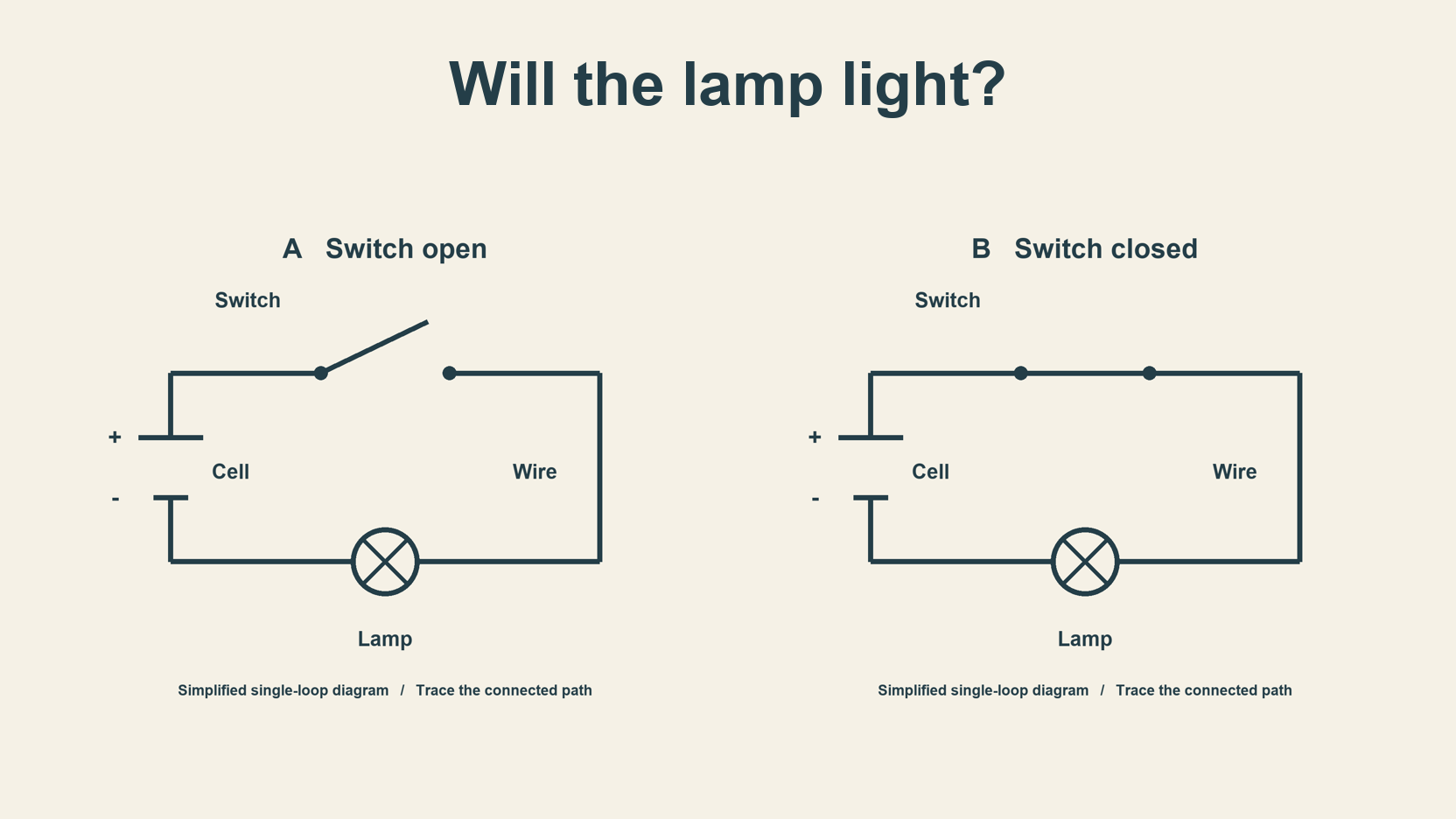
Quick summary
In this electric circuit jigsaw activity, reconstruct two versions of one diagram and predict the lamp state. Trace the whole path through the components, then explain what changes when the switch closes.
Key takeaways
- 01Make a prediction before rebuilding the image.
- 02Trace both sides of the lamp and the switch contacts.
- 03Keep your explanation with the diagram version you examined.
Read the circuit before moving a piece
Start with diagram A and give yourself a question to answer. Will the lamp light if the switch stays as drawn? Write a prediction before opening the puzzle. Leave room for one sentence explaining the part of the drawing you used.
We checked the open and closed circuit explanation from the U.S. Energy Information Administration while preparing these original images. A working cell and suitable lamp need a complete conducting path through the lamp and back to the cell. An open switch breaks that path. Our example assumes the cell, lamp and wires work normally.
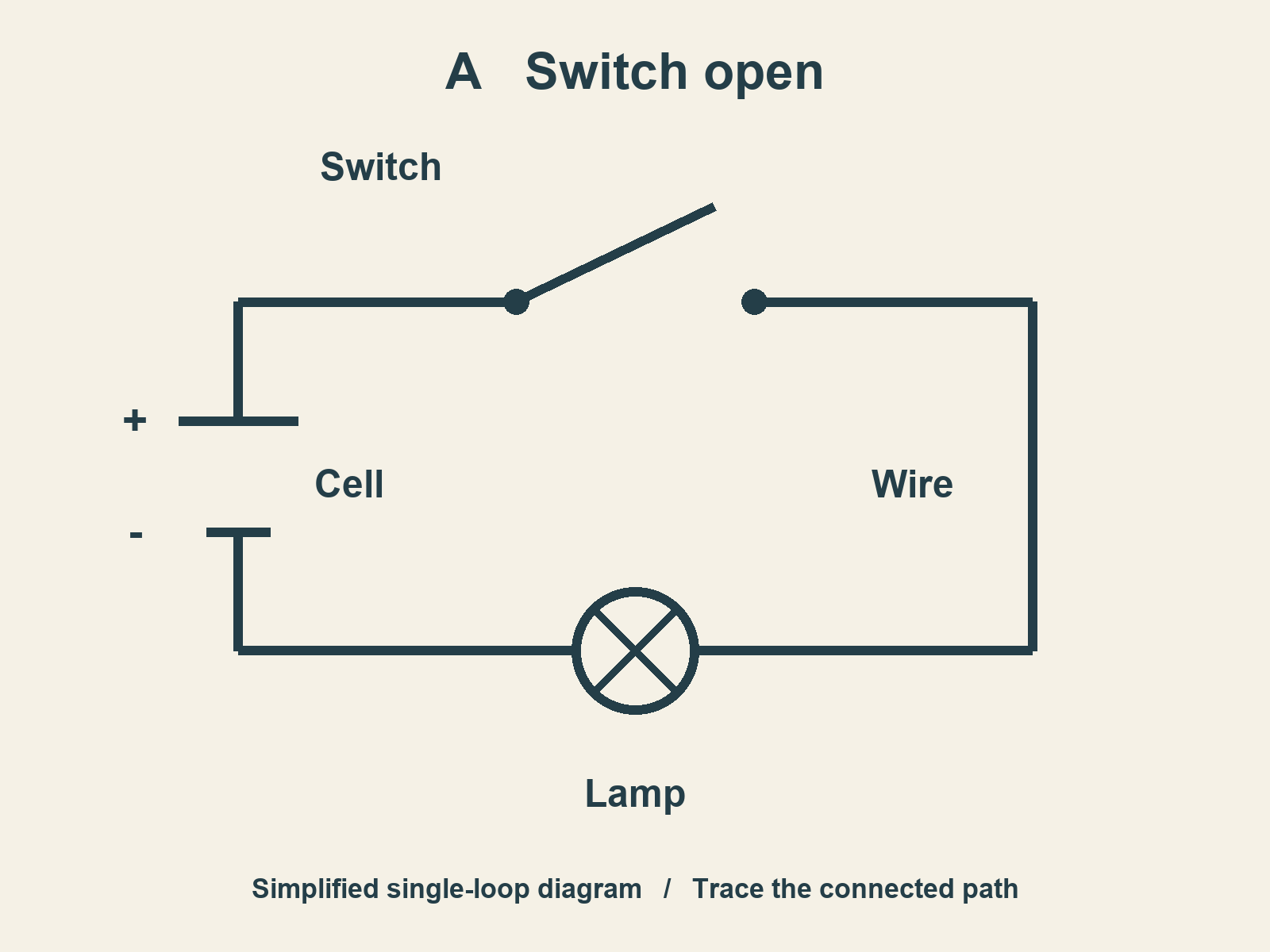
The two unequal lines on the left represent one cell. The longer line is marked positive and the shorter line negative. The circle with a cross represents the lamp. Dark lines between the components represent wires, and the hinged line at the top is the switch arm.
Find both switch contacts. Then follow a wire with your finger or cursor. When you reach the cell symbol, identify the component instead of treating the space between its two lines as another loose wire. The open switch gap is the interruption to compare with diagram B.
Reconstruct one diagram at a time
Download diagram A with the open switch.
Download diagram B with the closed switch.
Upload A in DIY and choose Easy with 12 pieces. This four by three layout suits the proportions of the supplied image. Keep the original PNG available for a larger view of the switch. If the file is stored in your Downloads folder, select it there when the image picker opens.
As you assemble, use the labels to orient the drawing and the dark wire segments to connect its sides. Some cuts can split a component across pieces. A piece carrying only an empty patch still belongs somewhere in the image, even though it contributes little to your explanation of the circuit.
After assembling A, revisit your prediction. Open the reference picture if the small switch contact is difficult to inspect. Say what happens at that gap. Keep your original answer so you can see whether your explanation changed after you examined the whole drawing.
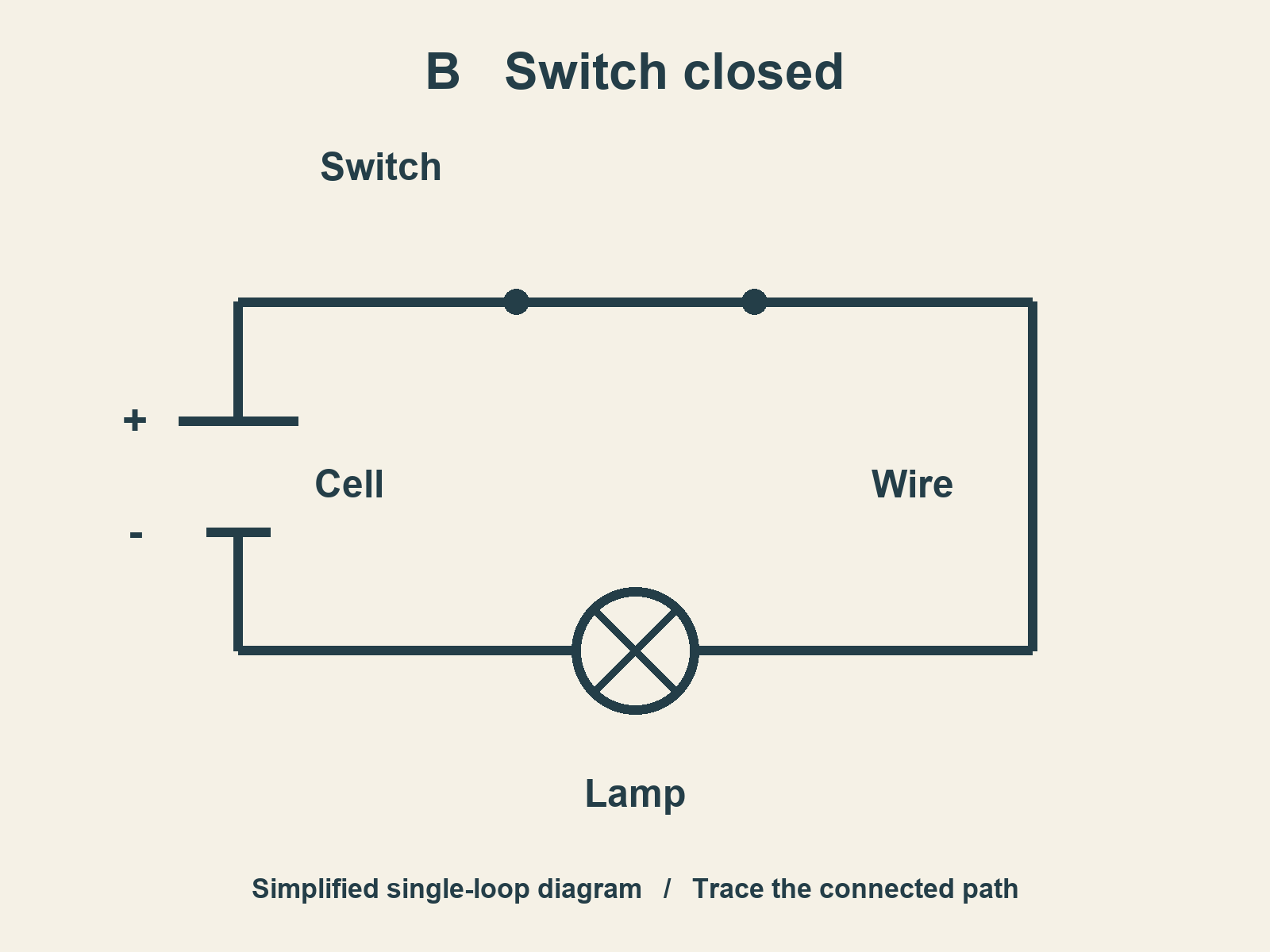
Repeat with B at the same piece count. The positions of the cell, lamp and wires stay fixed. The switch arm now meets its other contact. The lamp symbol also stays the same, so your prediction has to come from tracing the path.
Compare the connected paths
For this open and closed circuit puzzle, place A and B side by side after the reconstruction. Point to the feature that changes. You have already seen most of the second picture, so familiarity can help with placing pieces. Keep your lamp prediction and its reason beside each version.
| Question | Answer to check against the image |
|---|---|
| What stops the complete path in A? | The switch arm does not meet the right contact. The lamp is off under the stated working-component assumptions. |
| What changes in B? | The switch arm joins both contacts, completing the path through the cell, wires and lamp. The lamp can light. |
| Suppose a wire on the right is broken while the switch stays closed. What happens? | That new gap interrupts the only loop. The lamp goes out. Point to the proposed break when explaining. |
For the third question, mark a copy of B with a short gap in the right-hand wire. Keep that mark visible while explaining. It changes a different part of the circuit from the switch, and gives you a way to check whether you were tracking the whole loop or only reading the title.
An imagined solver might assemble A correctly and say the lamp lights because a wire reaches it from the cell. Ask them to continue tracing from the other lamp connection. Have them locate the open switch and revise the answer using the entire path. Record the first explanation and the revision as separate sentences.
Keep the prediction beside the evidence
Use a short note with four fields in your own notebook. Record the diagram version, your lamp prediction, the visible path or gap you traced, and any revision you made. In a pair, let one person trace while the other checks the explanation against the full image, then switch roles.
This electric circuit jigsaw activity is intended for adults and readers aged 13 and up, with adult supervision for minors. Work with the diagrams on screen or on paper. The task asks you to inspect the pictured connections. Physical circuit construction needs its own equipment, instructions and supervision.
The browser cuts an image into geometric pieces. It does not calculate current or change the lamp when you move a switch-shaped piece. To compare states, load the two prepared images separately. The explanation check happens in your written answer or conversation.
An assembled picture records your circuit diagram reconstruction. A prediction supported by a traced path gives you an explanation to review. If you are uncertain, return to the complete diagram and name the contact or wire you need to inspect.
Sources and further reading
Frequently asked questions
Next move
Reconstruct a circuit diagram
Download one image and start with twelve pieces.