
Play better · Choose your own reference rule
Try a Jigsaw Challenge with the Reference Picture Closed
Quick summary
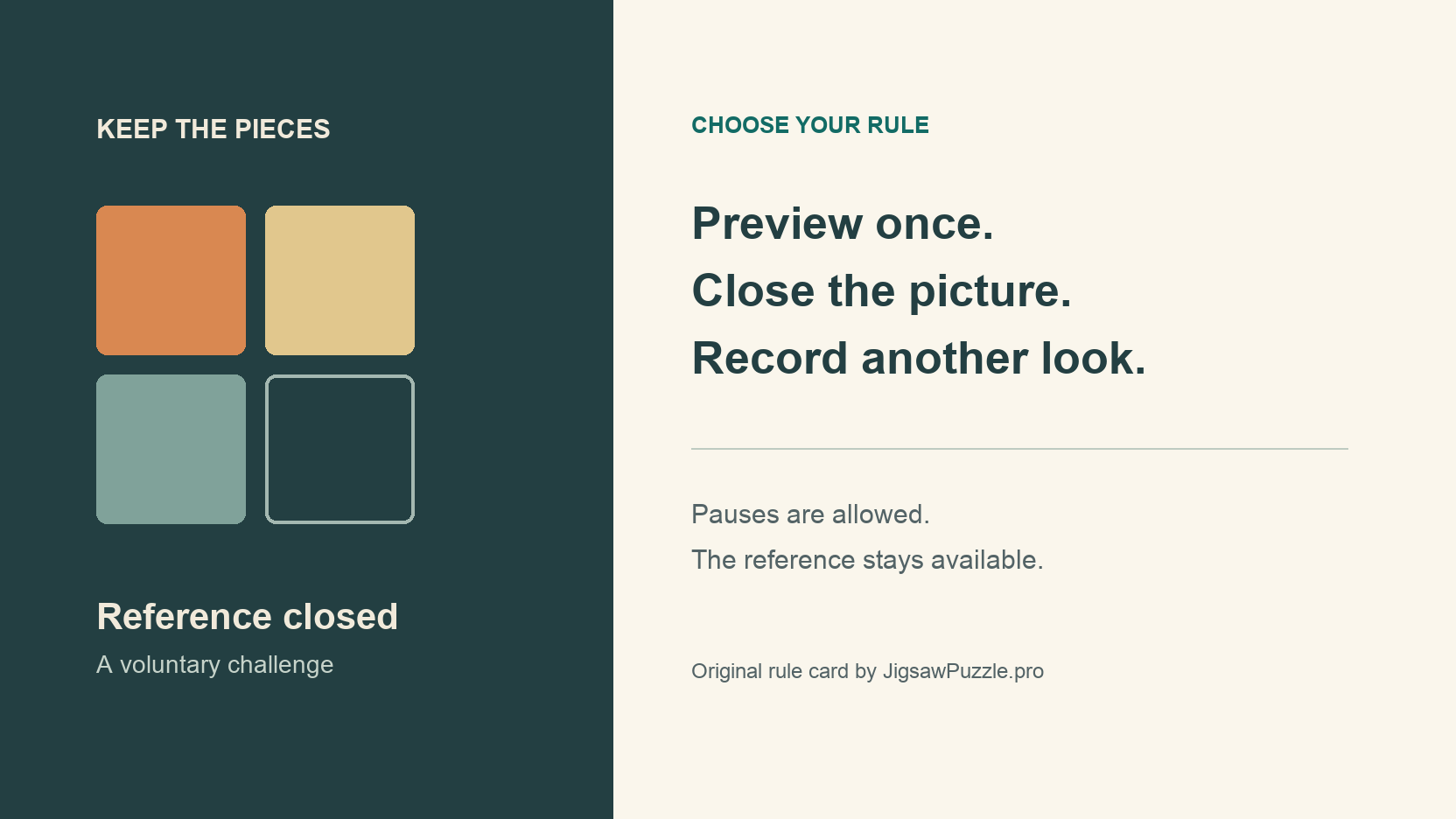
Close the reference picture after a short preview, then continue using the pieces. Trying a jigsaw puzzle without reference picture checks changes one part of your usual session. Decide what counts as another look before you begin.
We checked the reference control on a 24-piece Mountain Sunset board on JigsawPuzzle.pro. The image could be opened, closed and opened again. The challenge below is a voluntary rule you can keep beside the board. The site does not enforce it.
Key takeaways
- 01Choose a preview allowance before moving pieces.
- 02Pauses are allowed, with hands off the board.
- 03Record another look and decide how to continue.
Define the help you are choosing to limit
You have already seen the gallery thumbnail when choosing a picture. You might also recognize the scene from an earlier visit. Keep that exposure in your session note. This version starts with a known picture and limits later reference checks.
Other products use different rules. Jigsaw Explorer describes a mystery option that disables its preview during play and prevents piece-count changes. Galison describes physical surprise puzzles whose packaging and insert reveal only part of the composition. Those restrictions belong to those products.
Read Jigsaw Explorer’s description of its mystery option.
See how Galison describes its physical surprise format.
On this site, the Show Reference button remains available. Pieces keep their orientation, and snapping still helps matching neighbors connect. Closing the reference limits one source of information while those aids remain available.
Set a preview and restart rule
Start from the gallery and choose a comfortable piece count. Easy has 12 pieces, Medium 24, Hard 48 and Expert 96. Keep the count you would normally enjoy while changing the reference rule. A larger board introduces another change that can obscure what you wanted to try.
Our suggested allowance is 30 seconds with the reference open before your first move. Use a separate timer for that allowance. The game clock can already be running while you find the control. Look over the whole composition, then close the reference. Thirty seconds is a chosen rule, with no claim that it is an optimal preview length.
| Rule | Agreement for this session |
|---|---|
| Preview | One 30-second look before moving pieces |
| During play | Keep the reference closed and avoid other full-image copies |
| Pause | Allowed whenever needed, with no moving pieces or reference study |
| Another look | Count each reopening, note its reason, then close it |
| Restart | A new run on the same image counts as familiar |
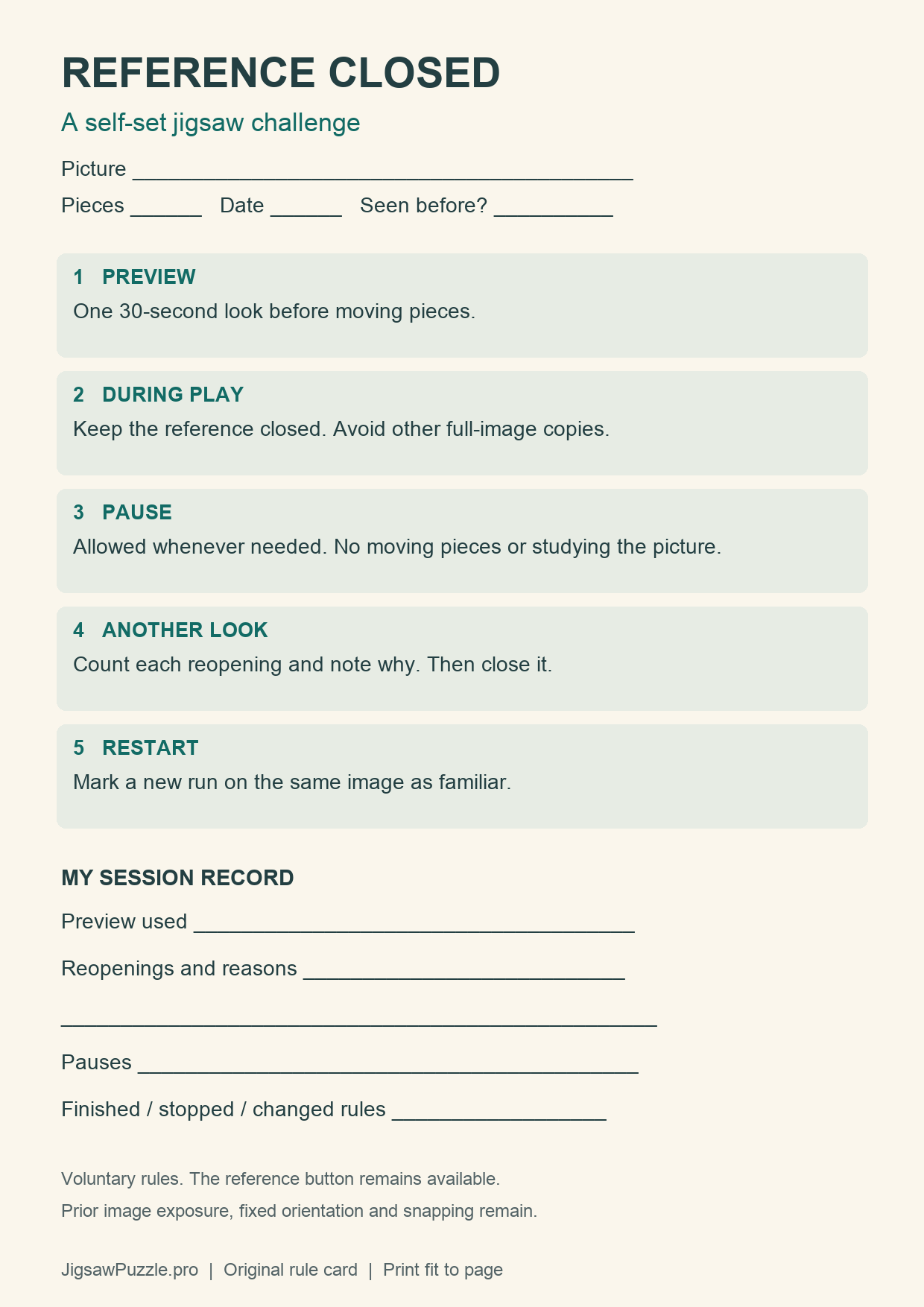
Download the one-page challenge card.
A restart cannot undo what you saw. If you reopen the picture and begin again, label the new attempt familiar. You can instead continue the existing board with one recorded check. Neither choice requires discarding the pieces you have already placed.
Keep a short record of reference checks
Write the picture name, piece count and prior exposure at the top of the card. Under preview, record the allowance you actually used. If you change it before moving a piece, update the note so you do not have to reconstruct the agreement afterward.
When you reopen the image, make one mark for that opening and add a few words about the question you wanted answered. Count an accidental opening too, with accidental beside the mark. Leaving the image open for several placements is worth describing separately, even though you pressed the button only once.
Our short control check used Mountain Sunset at 24 pieces. We opened and closed the image, moved one piece while it was closed, then paused. The displayed clock stayed at 25 seconds across observations. After resuming, we reopened the reference once at 31 seconds. We did not finish the board or test the suggested 30-second allowance.
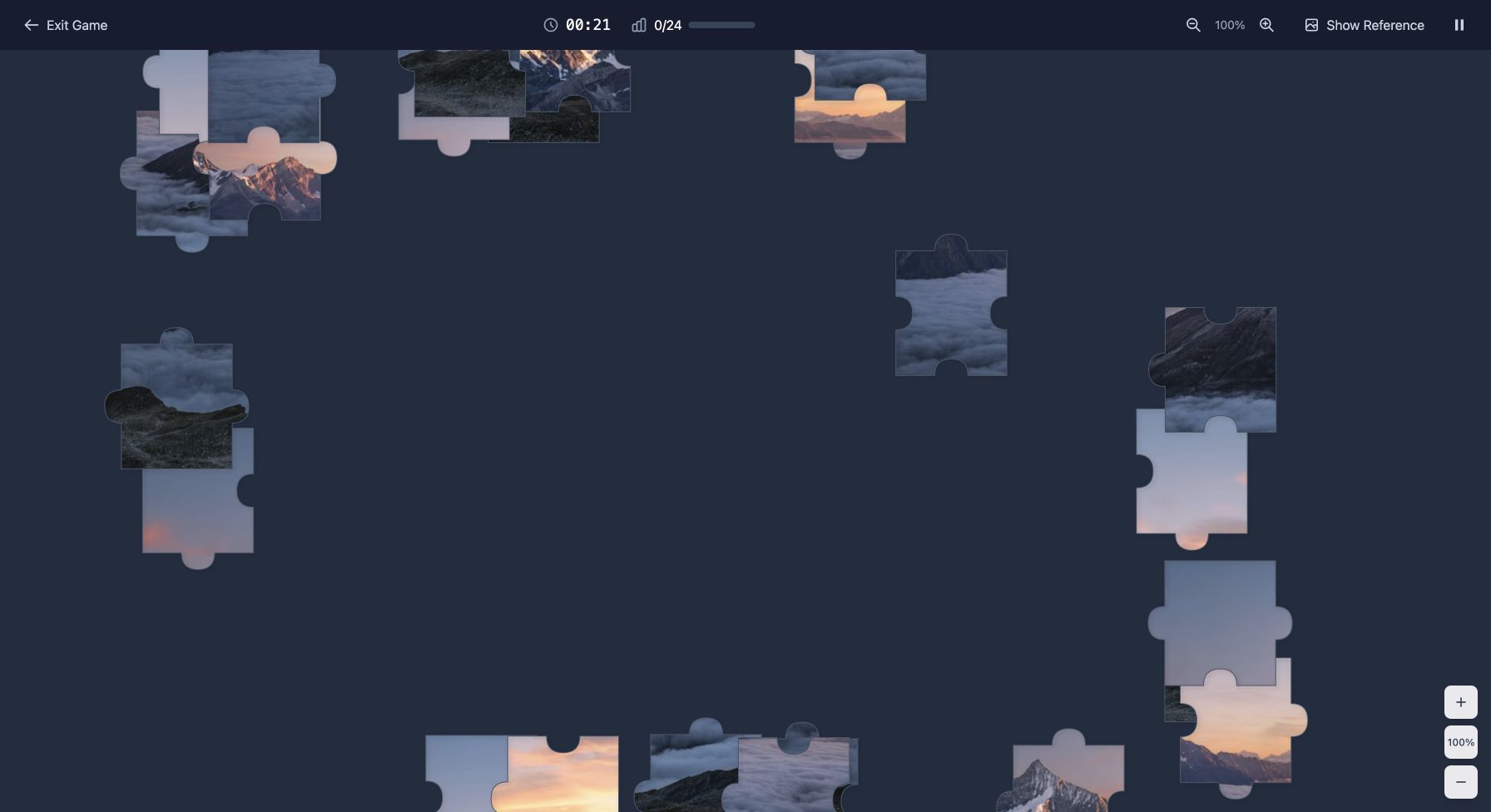
This was a control check with no completion-time comparison or measured change in memory. Keep your own notes equally literal. A brief reason for looking helps you understand what happened when you return to the record.
Relax the rule when the session stops being useful
Pause whenever you need a break. The current pause button stops the clock, so keep your hands off the pieces and leave the reference closed during that break. The board stays visible while paused. Resume when you want to continue, without adding a reference check for the pause itself.
If you want help, choose it openly. Reopen the image for one question, log the check and continue with the reference closed. Or end the challenge and leave the picture available for ordinary play. Record where you changed the rule. There is no requirement to struggle through a uniform patch just to preserve a zero.
Use the general solving guide when you want help with the pieces themselves.
At the end, write whether you finished, stopped or changed to reference-assisted play. Keep a partly completed session as a partly completed session. Repeating the same picture brings familiarity, so a later zero-check result alone cannot establish improvement.
Conclusion
Open the gallery when you are ready to try a board. Keep your completed card with the picture name so a familiar image is easy to recognize next time.
Sources and further reading
Frequently asked questions
Next move
Choose your next session
Start a board or return to the general solving guide.